How to Get Into Tennis: A Beginner's Guide
Tennis can look complicated from outside the fence. There is unfamiliar scoring, a wall of racket choices, and the feeling that everyone else already knows what they are doing.
The good news is that you do not need perfect technique, expensive equipment, or a regular partner before you begin. You need a court, a comfortable racket, a few balls, and a simple plan for your first month.
1. Decide what you want from tennis
Your goal shapes the best way to start.
- For fitness: Try a beginner group class or cardio-focused session.
- For a new social activity: Look for group coaching and beginner match play.
- For competition: Start with technical lessons, then add structured points and matches.
- For casual fun: Book a court with a friend and learn enough technique to rally safely.
You can change direction later. The important thing is choosing a first experience that feels welcoming enough to repeat.
2. Keep your first equipment simple
Borrow or rent a racket for your first sessions if possible. This gives you time to learn what grip size, weight, and head size feel comfortable before buying.
You will also need:
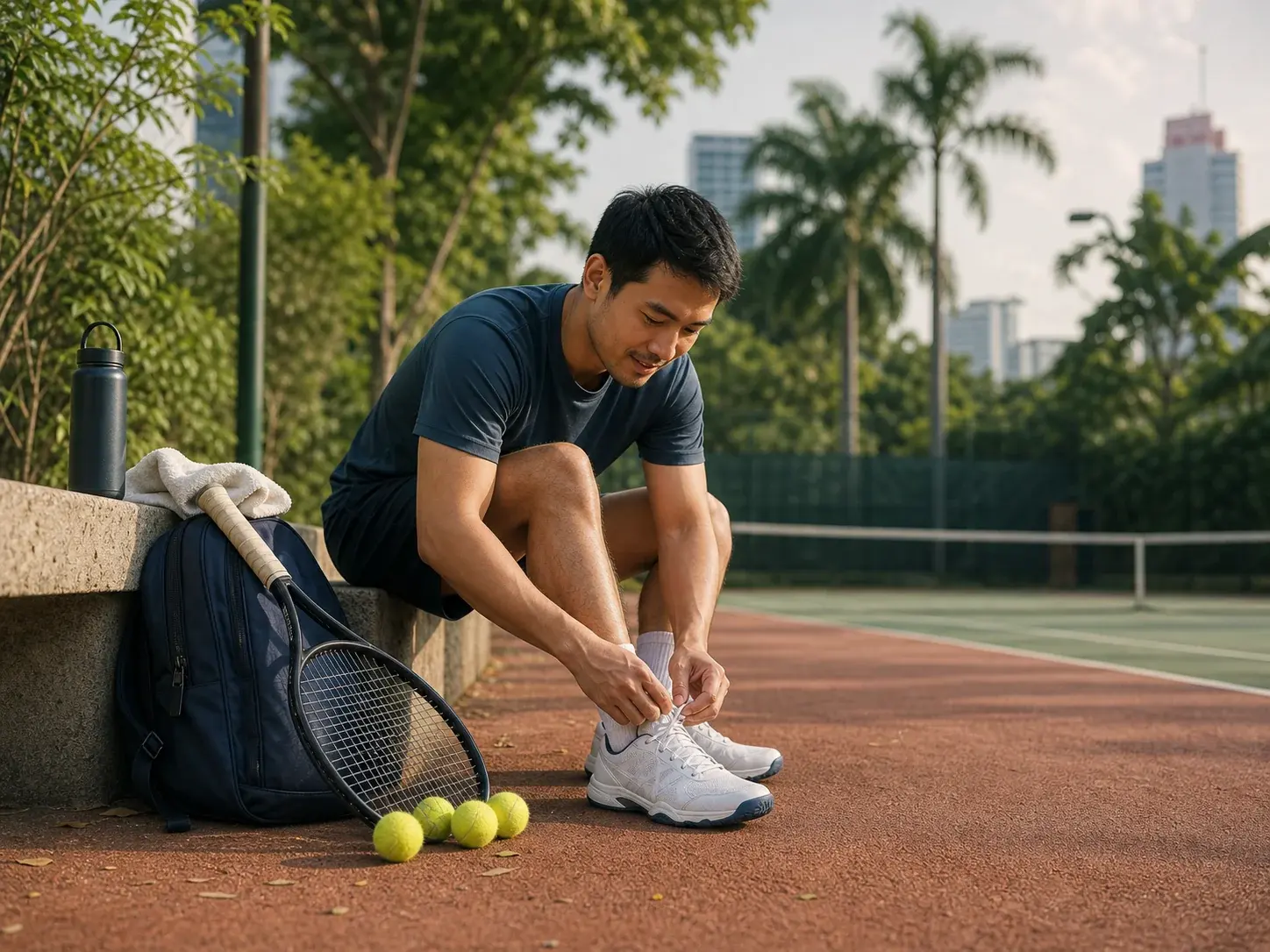
- Court shoes that support side-to-side movement
- Comfortable, breathable clothing
- A water bottle and sun protection
- Regular tennis balls, or slower beginner balls if your coach recommends them
A more expensive racket will not replace good timing or consistent practice. Choose comfort and control first.
3. Take at least one beginner lesson
A coach can help you avoid habits that become difficult to change later. Your first lessons should establish a relaxed grip, balanced ready position, safe swing paths, and a serve motion you can repeat.
Group classes often cost less and introduce you to players at the same stage. Private lessons are useful when you want individual feedback or feel unsure about a particular movement.
The USTA's introduction to adult tennis describes the beginner foundation in similar terms: grip, stance, basic strokes, court position, and scoring.
4. Learn the game in a useful order
Begin with the skills that help you keep a ball in play:
- Ready position and recovery
- Forehand and backhand groundstrokes
- A controlled serve and return
- Basic volleys
- Scoring and court positions
Aim for a cooperative rally before trying to hit winners. Ten controlled balls in a row will teach you more than ten attempts at a spectacular shot.
5. Practice twice a week if you can
Progress comes from frequency more than marathon sessions. Two focused hours per week are usually more useful than one exhausting session every two weeks.
| Day | Session |
|---|---|
| Tuesday | 60-minute beginner lesson or group class |
| Saturday | 60–90 minutes of relaxed practice with a friend |
| Optional | 15 minutes of footwork or shadow swings at home |
Finish while you still feel capable of returning. Early consistency is more valuable than doing too much and becoming sore or frustrated.
6. Find people near your level
A good beginner partner is patient, reliable, and interested in keeping the ball in play. Exact level matters less at first than having similar expectations.
As your rallies improve, a level system can make matching easier. NTRP is commonly expressed in half-point steps such as 3.0, 3.5, and 4.0. The USTA's NTRP characteristics describe levels through observable skills such as consistency, directional control, depth, and court coverage.
Do not worry about choosing a perfect rating after three sessions. Use it as shared language, then adjust after playing more people.
7. Start playing points early
You do not need a full serve or a three-set match. Play points from the service line, start with an underarm feed, or use shorter scoring.
Points teach decisions that basket drills cannot: where to recover, when to attack, how to handle nerves, and how to keep score. They also make practice feel like tennis.
Your first step in Bangkok
Choose a convenient court so travel does not become an excuse. Morning and evening sessions are usually more comfortable in Bangkok's heat, while covered courts make practice more reliable during rainy months.
Browse tennis courts, explore upcoming classes, or learn more about finding a local coach. The best first session is the one you will want to repeat.
